Why Old Placement Methods Are Failing – and What CLIF Solves
For decades, college placements and campus recruitment drives have been seen as the golden ticket to a successful career. Students work tirelessly to secure degrees, only to sit through aptitude tests, generic interviews, and mass recruitment rounds. While these traditional placement methods once served their purpose, they are rapidly becoming outdated in today’s dynamic job market. The truth is simple: what worked yesterday no longer works today.
 Sanjana Singh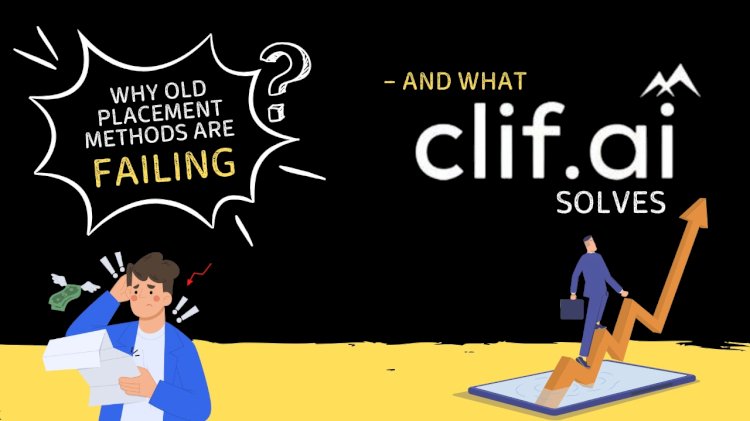
Why Old Placement Methods Are Failing
1. One-Size-Fits-All Approach
Campus placements often treat students as identical candidates, evaluating them through standard tests and interviews. But every student has unique strengths, career goals, and learning needs. This cookie-cutter model fails to identify individual potential or guide them toward the right roles.
2. Skill Mismatch
Industries evolve quickly, but placement methods lag behind. Many students graduate with degrees yet lack the industry-aligned skills companies demand. As a result, recruiters find a talent pool that’s unprepared, while students struggle to secure relevant roles.
3. Limited Career Guidance
Placement cells focus heavily on getting students “placed,” not necessarily on preparing them for long-term career growth. Without mentorship, personalized career mapping, or exposure to real-world requirements, students often take jobs that don’t match their aspirations.
4. Static and Outdated Systems
Placement processes are often manual, rigid, and focused on short-term success. They don’t track skill progress, provide continuous learning recommendations, or adapt to changing market conditions. This static nature leaves both students and recruiters dissatisfied.
What CLIF Solves
This is where CLIF AI steps in—not as a replacement for placement cells, but as a transformative partner that redefines career readiness.
1. Personalized, Milestone-Based Career Paths
Instead of generic preparation, CLIF AI creates customized career roadmaps based on an individual’s profile, goals, and skills. Each roadmap is broken into milestones—covering skill-building, certifications, projects, and mentorship sessions—so students grow strategically and measurably.
2. Real-Time Job Market Insights
Unlike outdated placement databases, CLIF AI leverages real-time data to provide:
-
Salary benchmarks for desired roles and locations
-
Skill gap analysis for specific job listings
-
Automated job matching tailored to a learner’s profile
-
Application tracking and interview preparation tools
This ensures students align their preparation with actual industry demand.
3. Mentorship That Bridges Academia and Industry
Where old systems lack guidance, CLIF AI excels. Students get matched with mentors based on their career goals and industry interests. Through one-on-one video sessions, secure messaging, and progress reviews, mentors provide the kind of personalized support that placement cells alone cannot.
4. Continuous Growth Beyond Campus
Placements often end once a job offer is secured. But careers evolve. CLIF AI stays with learners beyond their first role—helping them track skills, build portfolios, and prepare for future transitions. It shifts the focus from just “getting placed” to building a sustainable career.
The Future of Placements is Here
Old placement methods are collapsing under the weight of modern challenges. Students need more than job fairs and aptitude tests—they need clarity, personalized guidance, and industry-ready skills. Recruiters, too, are demanding candidates who are not just qualified, but also prepared to contribute from day one.
CLIF AI is the missing link. By combining artificial intelligence with human mentorship, it transforms how students and professionals prepare for careers, offering a smarter, more sustainable alternative to outdated placement systems.
The world doesn’t need another placement drive. It needs a career revolution—and CLIF AI is leading the way.